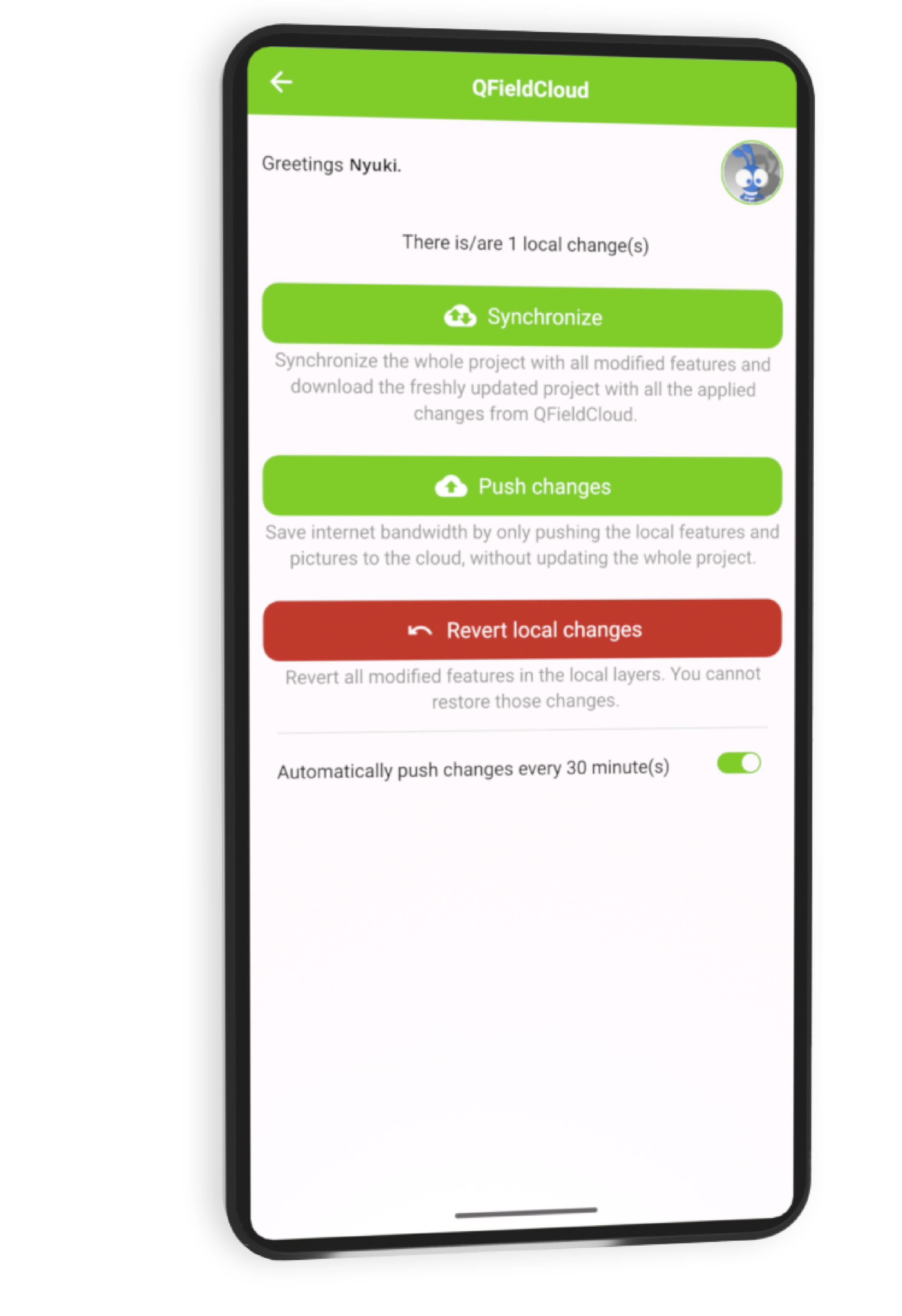
Synchronise
and collaborate.
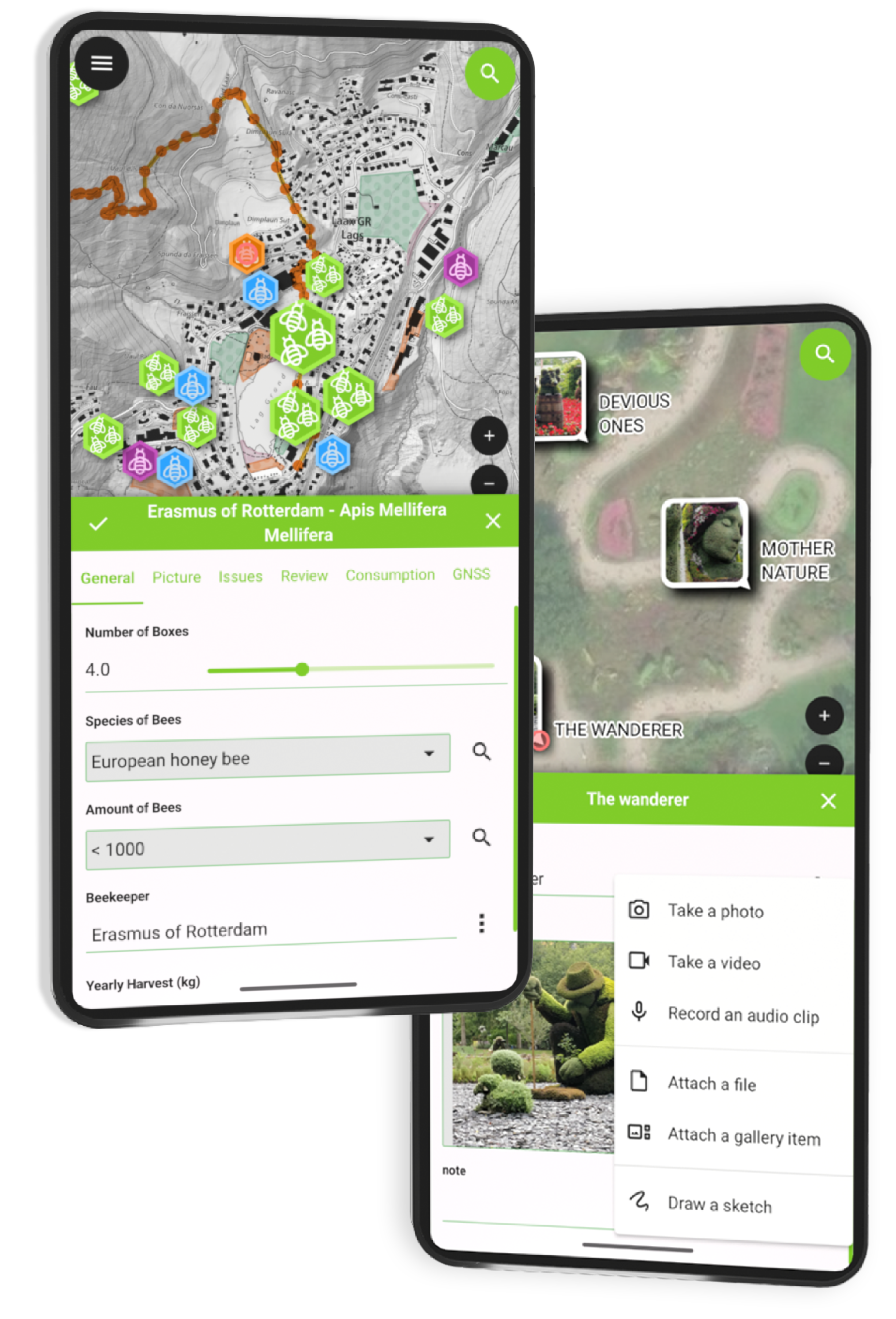
Collect
and edit data.
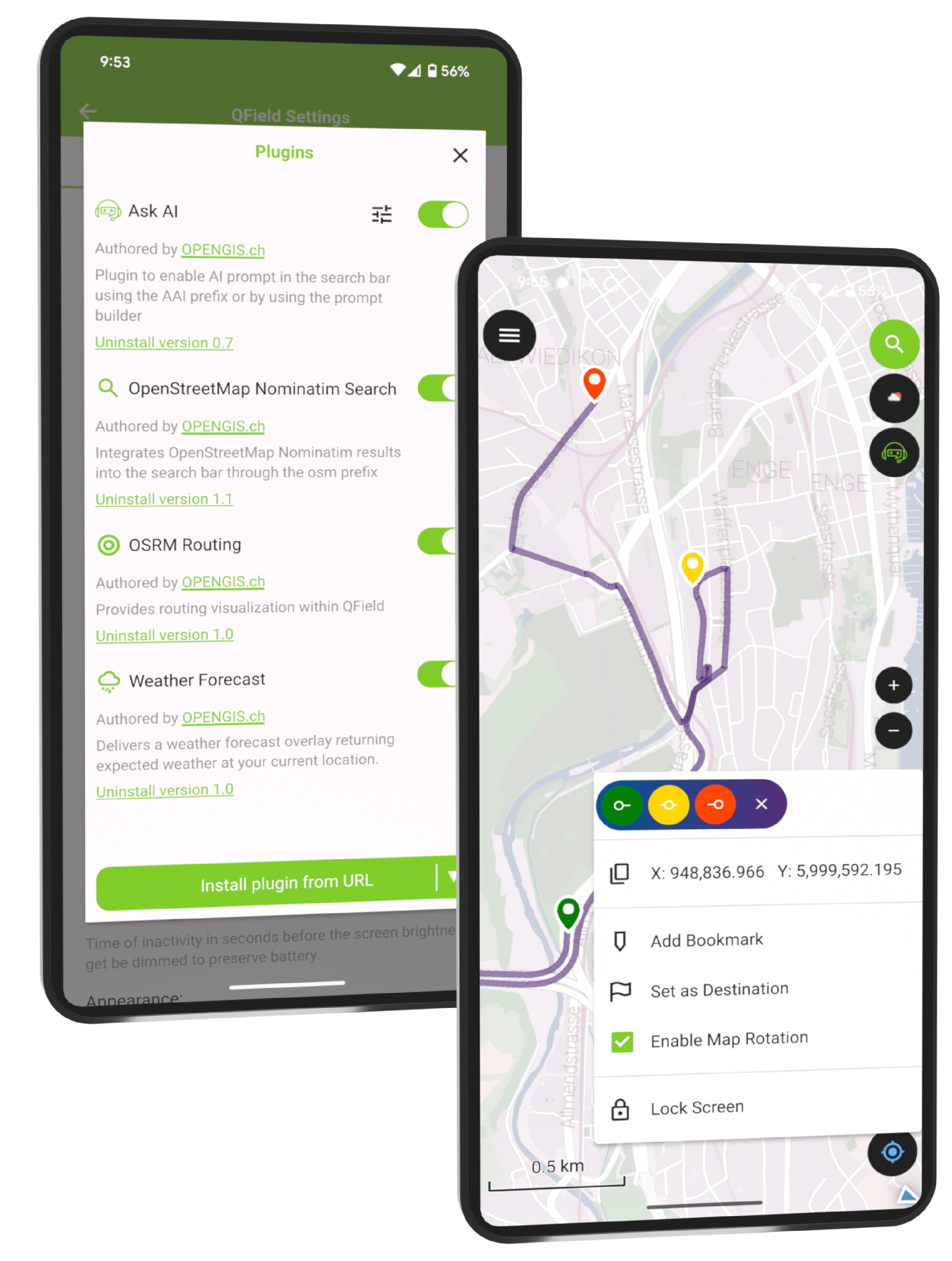
QFieldCloud allows to synchronize and merge the data collected by your team in QField. From small individual projects to large data collection campaigns, QFieldCloud removes the pain from synchronizing and merging data.

Sync projects and data in real time and work with GeoPackages, KML, GPX, georeferenced PDFs, and more.

Create rich survey forms with constraints, logic, defaults, and validations — all in QGIS.

Working in the wild ? You can continue to work seamlessly with QFieldCloud, and sync back your changes once you're back in town.

QFieldCloud perfectly integrates and extends your QGIS based geodata infrastructure.

Subscribe for a worry-free Swiss-made solution hosted on Swiss datacenters or contact us for your private cloud instance.

QFieldCloud code is open source so you can see what is actually happening to your data.
Let QFieldCoud manage it. Accurately, efficiently, and anywhere it matters. Get started now
To make a link ecosystem function significantly better than a chaotic social media feed, creators and community managers must shift toward structured content hubs. The table below details what makes an optimized system superior to standard Twitter link drops: Standard Twitter Link Drops Optimized Hub Strategy Throttled by free cloud hosts Accelerated by global Content Delivery Networks (CDNs) Security Screening None; completely vulnerable to spam Automatic malware scanning and password barriers Link Longevity Highly volatile; breaks quickly Persistent hosting with dynamic URL redirection User Analytics Basic click counters Comprehensive geographic and traffic-source tracking How to Build a Better Community Link Hub
Instead of searching just "vgk," use advanced operators to filter out noise:
While structured file sharing networks offer superior speed and accessibility, security remains a paramount concern. Safely engaging with any digital distribution network requires a layered defense strategy: 1. Enforce Sandbox Protocols vgkmegalinktwitter better
are you primarily trying to find?
Understanding how to access, organize, and optimize these digital assets is the key to a smoother experience. Let’s explore how a structured, community-first approach makes navigating undeniably better, safer, and more efficient. 🛠️ The Challenges of Traditional Twitter Searches To make a link ecosystem function significantly better
Twitter’s algorithm does not reward accuracy ; it rewards rage . A fake leak about GTA 6 will get ten times the engagement of a detailed developer interview. When you browse standard gaming Twitter, you are fighting against a system designed to keep you angry.
If you want to outshine the "megalink" trend, try these "better" alternatives: Native Content First: Instead of a "mega link" to an external site, try a mega thread Enforce Sandbox Protocols are you primarily trying to find
: Standard direct URLs do not provide insights into click tracking, geographic data, or device types, leaving creators blind to asset performance. 2. Structural Strategies to Make Asset Distribution Better
: Long, unformatted text strings look unprofessional and fail to establish brand authority.
designed to look like legitimate zoo or museum membership FAQs to trick users into clicking. Recommendation



QField and QFieldCloud form the leading professional fieldwork platform used in enterprise settings for efficient geospatial data collection, synchronization, and management. As Digital Public Goods, they not only excel in enterprise and professional applications but also contribute significantly to advancing at least six of the United Nations Sustainable Development Goals (SDGs), promoting a more sustainable and equitable future.
Subscribe to our newsletter and stay up to date on the latest and greatest!
QField is released under the GNU Public License (GPL) Version 2 or above. QFieldCloud is released under the MIT License. Developing our solutions under these licenses means that you can inspect and modify the source code and guarantees that you will always have access to a complete QGIS-based field data collection and synchronization platform that is free of cost and can be freely modified.
View our Legal Information to learn about our privacy policy, terms of service, data processing agreement (DPA), and other legal matters.
QField, QFieldCloud and QFieldSync are developped by OPENGIS.ch. OPENGIS.ch offers consulting, development, training and support for open-source software including QField, QGIS and PostGIS.