
Why Tyler Perry's Acrimony is Better Than You Remember While many critics initially dismissed Tyler Perry’s 2018 thriller Acrimony as another entry in his catalog of melodramas, time has been kind to the film. Its polarizing narrative and raw intensity have sparked a lasting cultural debate that few modern films achieve. Far from being just another "scorned woman" trope, Acrimony is a sophisticated, campy tragedy that demands a second look. A Masterclass in Subjective Storytelling
Why Tyler Perry’s Acrimony Deserved Better: A Re-Evaluation of a Polarizing Masterpiece
Without Taraji P. Henson, the film wouldn't have nearly the same impact. She delivers a performance that shifts from a low simmer of resentment to a "full banshee" explosion of rage. Acrimony movie review & film summary - Roger Ebert tyler perrys acrimony better
Here is why Tyler Perry’s Acrimony is better than its initial reputation suggests and why it remains a unique entry in his repertoire. 1. Taraji P. Henson’s Masterclass in Unhinged Performance
Tyler Perry proved he has an eye for visuals. Stylistically, the film has moments of genius, utilizing slow camera movements that push in on Melinda, emphasizing the building pressure inside her. The film generally looks crisp and moody, a stark contrast to the stage-like lighting of some of his earlier work. While there are a few questionable green-screen moments, the overall color palette of deep purples and harsh blacks adds to the claustrophobic sense of dread that permeates the final act. Why Tyler Perry's Acrimony is Better Than You
Acrimony works because it is messy. It reflects the real-world complexities of "sunk cost fallacy" in relationships. We’ve all seen a couple like Melinda and Robert—one person waiting for a payoff that may never come, and the other person feeling suffocated by the weight of expectations.
A script is only as good as the actor delivering it, and Taraji P. Henson carries Acrimony with fierce intensity. Henson portrays Melinda not as a stereotypical "angry Black woman," but as a tragic figure consumed by borderline personality traits, unresolved grief, and deep-seated betrayal. Henson’s performance is a masterclass in escalation: A Masterclass in Subjective Storytelling Why Tyler Perry’s
Any discussion of "Acrimony’s" merits must begin and end with its star, Taraji P. Henson. Even the film’s most scathing reviews conceded that Henson was, in the words of one critic, "damn watchable". She throws herself into the role of Melinda with a ferocity that is rarely seen in contemporary thrillers. As Melinda’s mental state deteriorates over the course of an 18-year marriage to a deadbeat dreamer, Henson masterfully navigates the character's evolution from a sweet and patient lover to a woman consumed by a cold, volcanic wrath.
Critics were thrown off by who they were supposed to root for. "Acrimony" refuses to give you an easy hero. On one hand, Robert (played with smoldering passivity by Lyriq Bent) is an emotional con artist who bleeds Melinda dry of her mother's inheritance, cheats on her, and wastes twenty years of her life on a failing battery invention. However, the film also suggests that Melinda is a wildly unreliable narrator with a dark passenger akin to Dexter, implying her nature was combustible long before Robert. This ambiguity is not a bug; it is a feature. The film asks us to sit in the discomfort of knowing that both people in a toxic relationship can be right and wrong simultaneously.
A major reason Acrimony has staying power—and is often discussed as being "better" than expected—is the debate it sparks. Upon release, audiences were divided. Some saw Melinda as a villain who refused to move on; others saw her as a justified victim. A film that can generate such passionate discourse years after its release is doing something right narratively.
| Here are screen dumps from the program illustrating some of the outputs to the screen.
Click on them to see larger versions; use your browser's BACK button to return. |
||
 Design menu |
 Analysis menu |
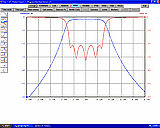 Plot S21 & S11 |
 S21 with limits |
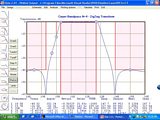 S21, limits, markers |
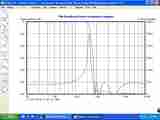 S21, delay |
 Smith Chart |
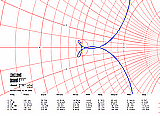 Smith 2x, markers |
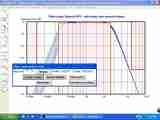 Tuning mode |
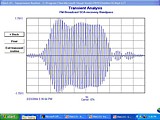 Tone burst |
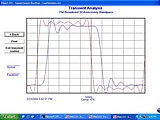 Envelope of burst |
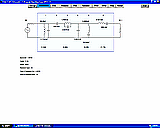 Schematic |
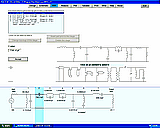 Circuit editor |
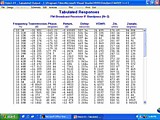 Tabulated output |
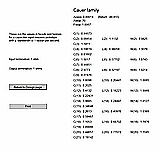 Normalized values |
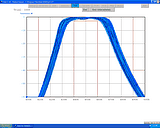 Monte Carlo running |
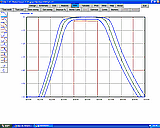 Monte Carlo stopped |
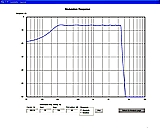 Modulation response |
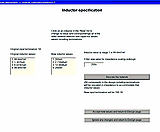 Inductor specs |
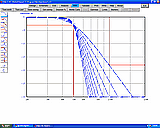 Saving overlays |
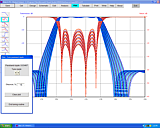 Tuning passband ripple |