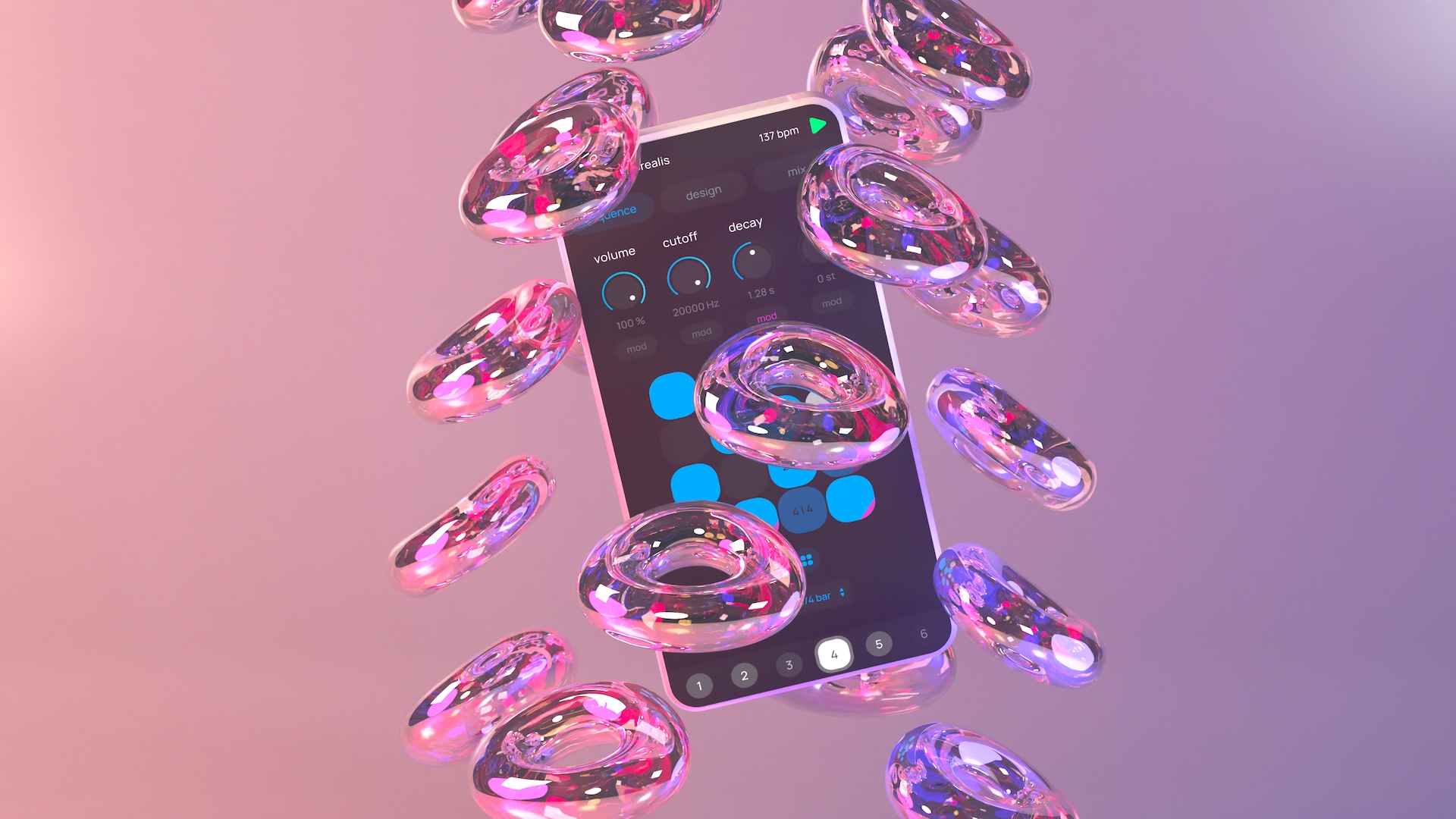

Polaris is a music-making app that lets you produce electronic music right from your phone or tablet. Whether you're an experienced musician or a complete beginner, you'll feel right at home using it.
new update released
Polaris is an intuitive musical sketch pad tailored for phones and tablets so you can capture your ideas on the go. The design philosophy is simple: provide the essentials in an accessible, but powerful format to get ideas down whenever and wherever inspiration strikes. The end result is a music production app that allows you to skip the complicated learning curve of traditional Digital Audio Workstations (DAWs) so you can get to the fun part sooner.
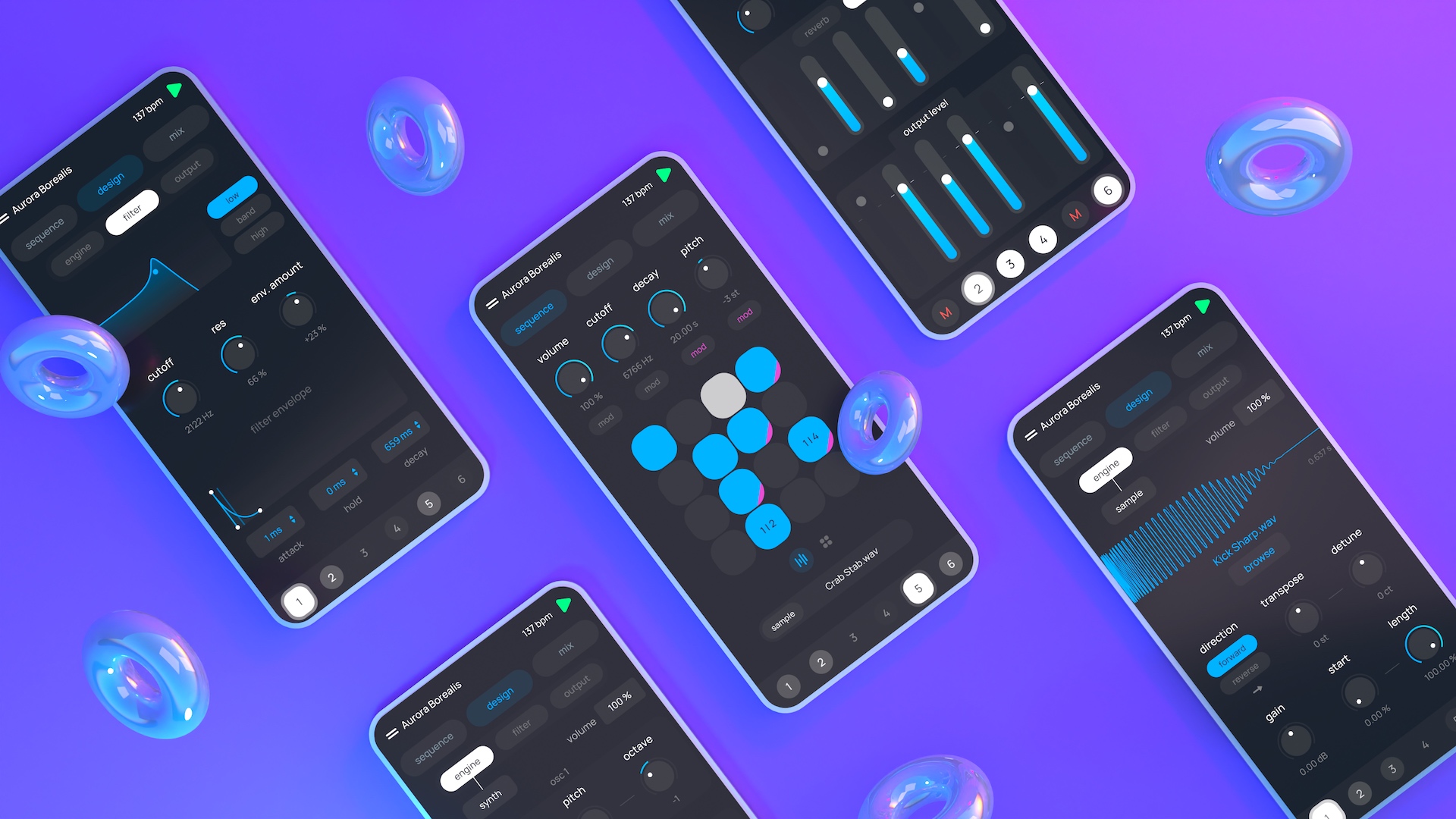
Export your patterns as audio files with the built-in recorder. From short loops to longer performances, your recordings are ready to use in any music app, desktop software, or in Polaris itself. When recording, everything is captured in real time meaning that you get every knob twist, step edit, and seamless switch between projects. This results in perfectly cut, ready-to-use loops with no extra editing required.

The sequencing logic in Polaris was inspired from modern drum machines and grooveboxes. Simply press a step on the 4x4 grid to start your creative journey. Create sequences on up to six tracks to combine their different sounds.
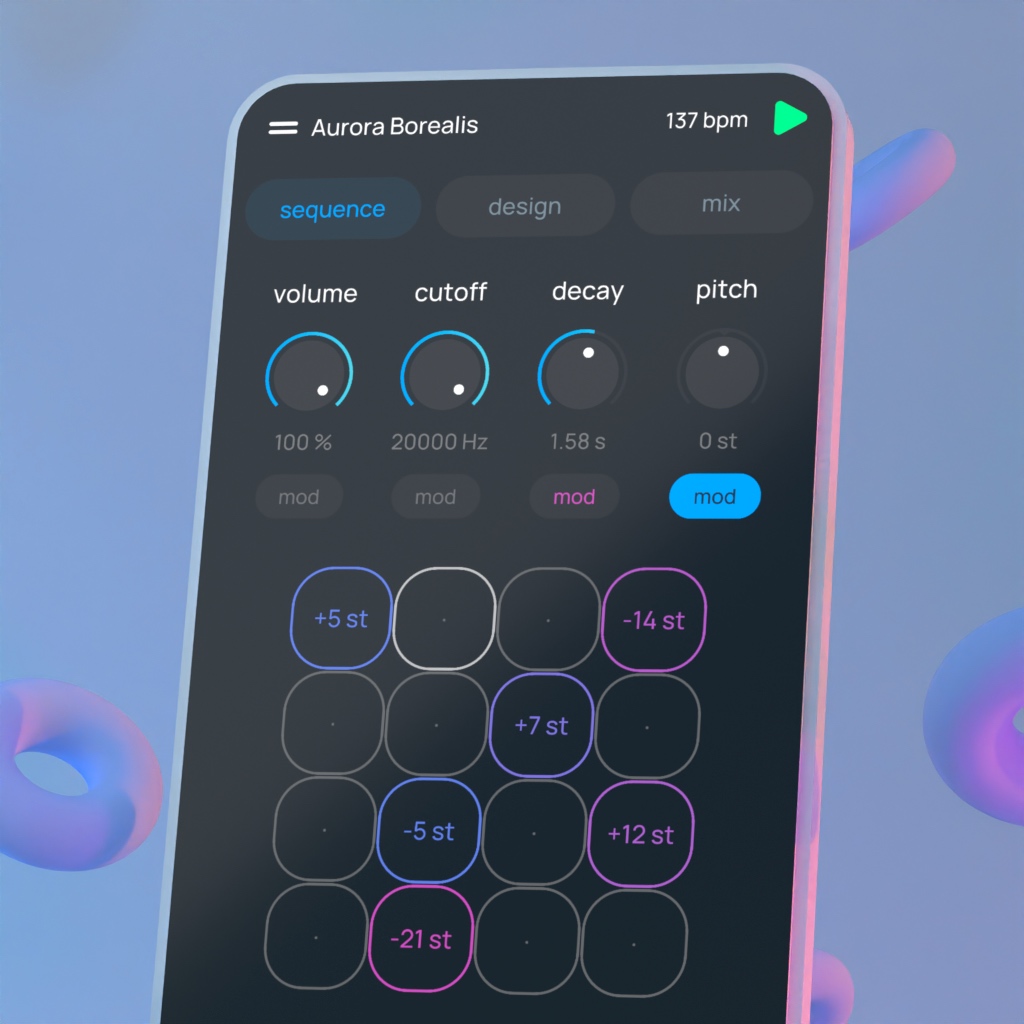
Step modulation allows you to create complex variations within seconds. Easily alter your volume, cutoff, decay, and pitch by dragging the values higher or lower.
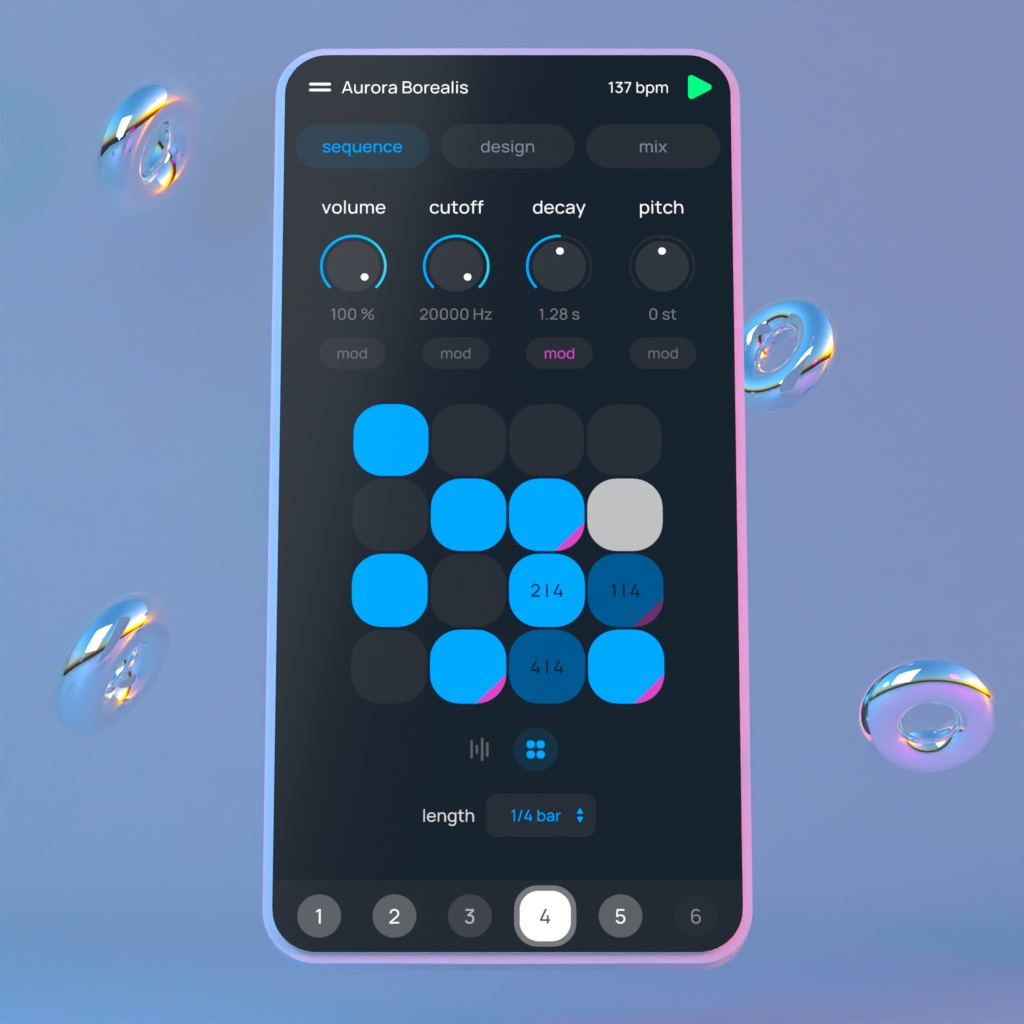
Seamlessly chain up to eight grids or bounce between patterns on the fly to keep the inspiration flowing. Each track runs at its own pace: from a chill cruise with a full bar per step to a lightning-fast 1/32 bar speed. Plus, trig conditions keep your grooves fresh by allowing you to trigger notes every two or four loops.
One of the perks of electronic music production is the variety of sounds you can experiment with. Get started with Polaris' meticulously curated sample bank, which should keep you busy for a while. Want to do it your way? Load your own samples directly into the app for limitless sonic exploration.
For even more variety, try the synth engine, featuring a dual-oscillator architecture.
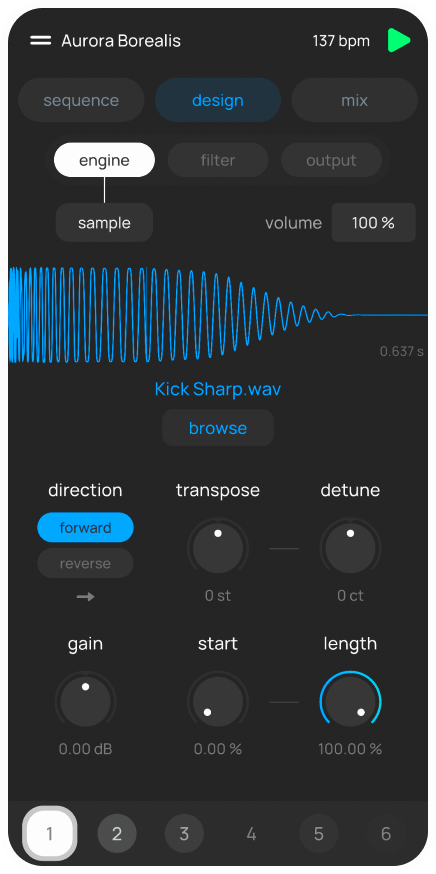
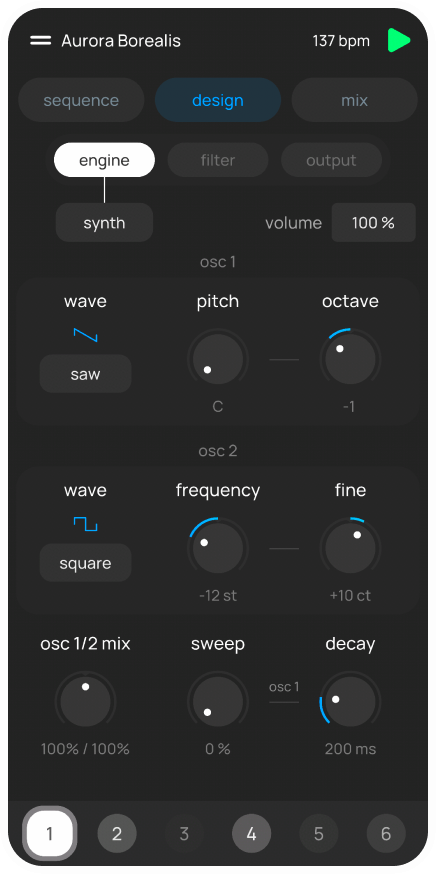
The sample and synth sound engines should cover most of your needs, from creating lush pads and deep rumbling basslines to bright plucky notes and sharp drum hits.
In addition, each track includes a multimode filter so you can sculpt your frequencies however you want, while the built-in distortion module can give you a little extra punch.
After crafting the perfect combination of sounds and sequences for your project, use mixing tweaks to magnify and fine tune your pattern.
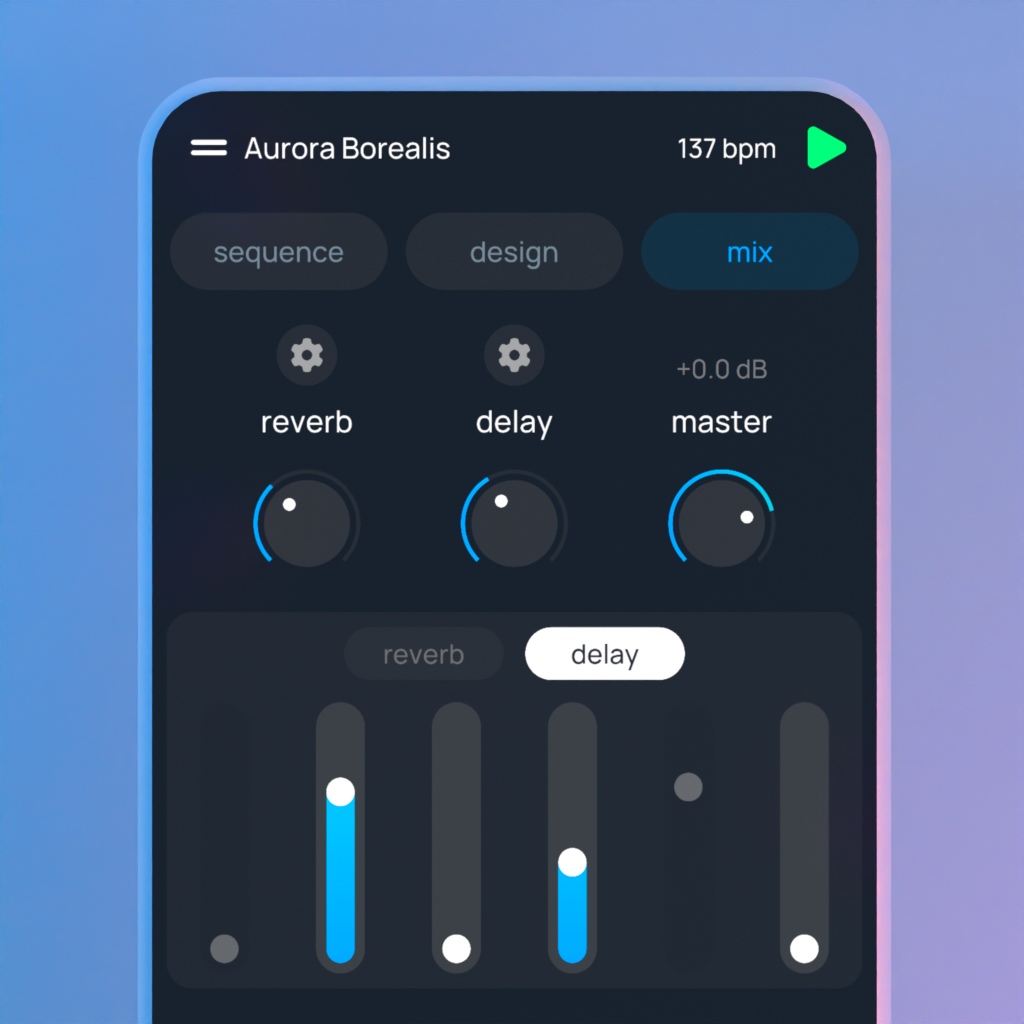
Use the reverb and delay modules to spice up the stereo image of your sound. Apply effects independently to each track to create a wider soundscape and push your sonic exploration even further.
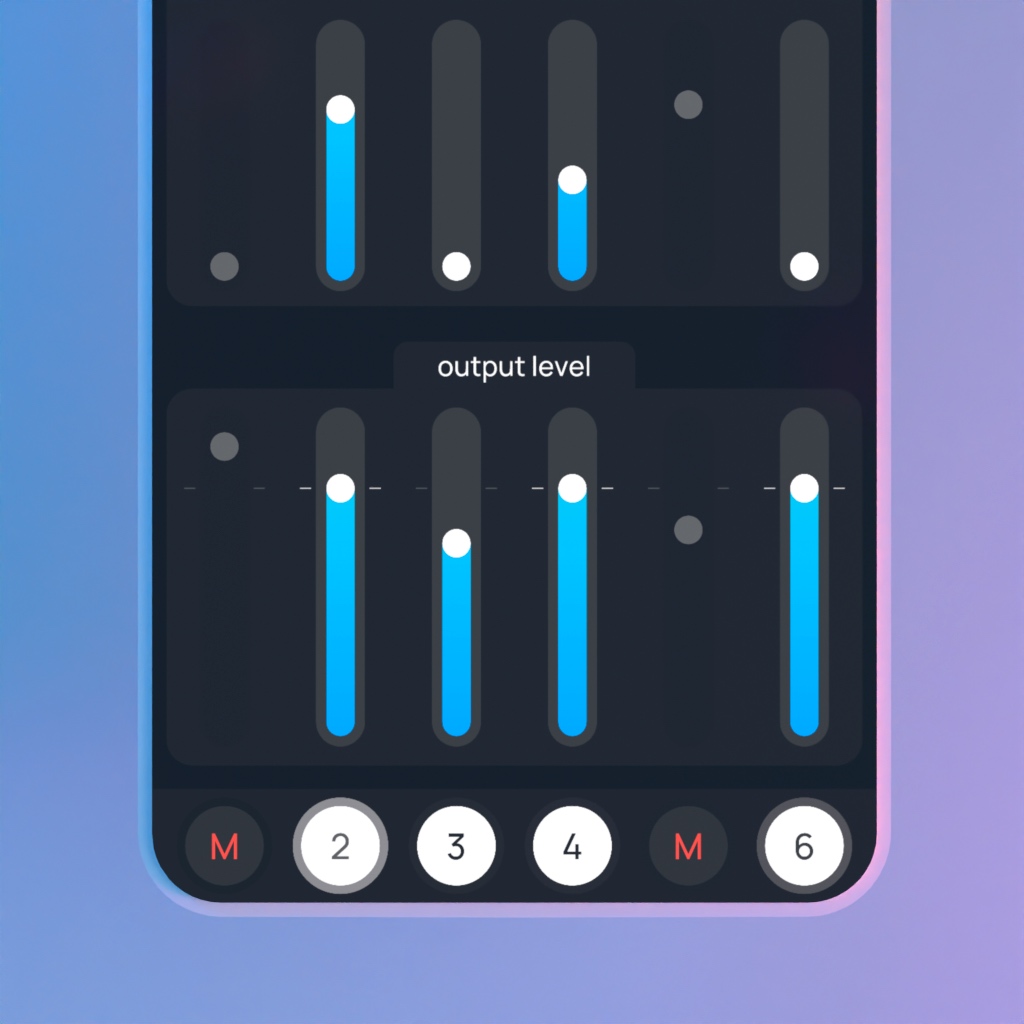
Whether you want to carefully adjust the mix between your tracks, or take advantage of the mute buttons to perform live, the virtual mixer is here for you.
Connect with other Polaris users for support and discussion. The Discord server is the spot to share community tips, report issues, and to hear first about upcoming features and releases.
 Join Discord
AUv3 plugin included in the iOS version
Since a complete, unmodified E3 ROM is not publicly available for download, fans use the Super Mario 64 Decompilation to recreate these versions:
However, the version of the game on those show floor kiosks wasn't the final product. It was a special demo build designed to be stable and showcase the most impressive aspects of the game. As a result, this E3 1996 kiosk demo is now considered a "lost media" artifact. To this day, a complete, preserved ROM (read-only memory) dump of this exact demo has not been found or released publicly, cementing its status as a true gaming "what-if".
: The E3 build used a "spinning heart" or different meter design in earlier stages, though the May 14 build began utilizing the final design. super mario 64 e3 1996 rom updated
: The build includes early assets such as bubbly trees with darker, harsher shading and coins featuring rectangular imprints instead of the final star design.
For decades, the E3 1996 version of Super Mario 64 was considered a "holy grail" for beta hunters. While various beta assets had been found hidden in retail cartridges, the actual build played at the trade show remained elusive. The current ROM circulating online is a result of the "Gigaleak" (a massive breach of Nintendo's internal servers), which contained the source code for this specific build. Modders and preservationists successfully compiled this source code into a functioning ROM (designated internally as shindou era development or specifically the Space World 1996 demo). Since a complete, unmodified E3 ROM is not
Modders have taken the retail Super Mario 64 engine and meticulously retrofitted it with the authentic 1996 assets. The latest updates to these ROM hacks offer unparalleled accuracy, featuring:
This article explores the significance of this specific E3 build, the "updates" it received compared to earlier, rougher versions, and its place in the 2020 Nintendo "Gigaleak" discoveries. 1. What is the Super Mario 64 E3 1996 Build? To this day, a complete, preserved ROM (read-only
For decades, the Nintendo community has been driven by a singular, obsessive pursuit: finding the legendary pre-release build of Super Mario 64 showcased at the Electronic Arts Show (E3) in 1996. This specific version of the game represents a transitional bridge between Shigeru Miyamoto’s earliest 3D concepts and the final masterpiece that revolutionized gaming. Recent breakthroughs, community restoration projects, and modern ROM updates have brought players closer than ever to experiencing this lost piece of history. The Mythos of the E3 1996 Build
: The health meter, coin counters, and lives indicators featured entirely different, bolder typography and placement.
Many iconic elements of the final game were either absent or drastically different in the May 1996 build: Project EEX | RHDC - Romhacking.com