Electronic Team uses cookies to personalize your experience on our website. By continuing to use this site, you agree to our cookie policy. Click here to learn more.
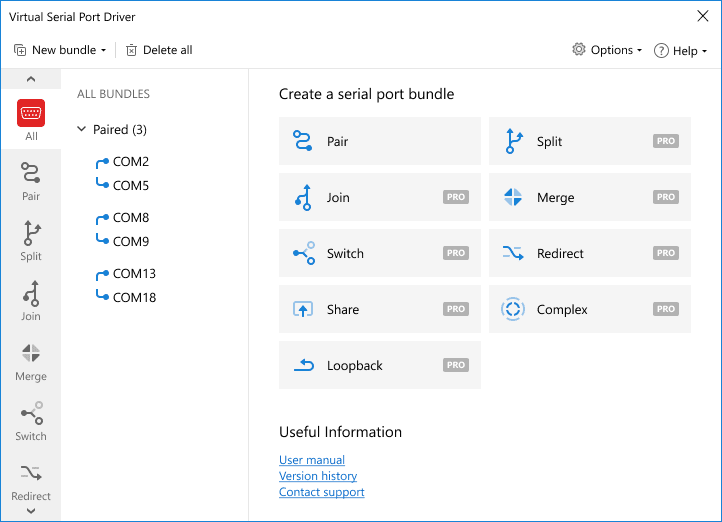
Virtual Serial Port Driver is designed for emulating interfaces for serial communication, i.e. serial ports. GUI version of this virtual serial port emulator is to be used as a standalone utility, and you can use API to integrate it in another application.

Kùzu v0.12.0: A Deep Dive into the Latest Release of the Embeddable Graph Database
MATCH (u:User) RETURN u.* // Returns all properties of the user node
: Added support for DOUBLE columns in vector indices, allowing for higher precision in similarity searches used in AI and LLM workflows.
Kùzu integrates seamlessly with the Python data ecosystem, including Pandas, Polars, and NetworkX. Here is a quick-start guide to building and querying a graph using Kùzu v0.12.0. Installation pip install kuzu==0.12.0 Use code with caution. Creating a Graph and Querying Data
The search term "kuzu v0 120" is widely understood to refer to of the Kùzu graph database. It is important to note that Kùzu v0.12.0, or "kuzu v0 120", is an important, but transitional, version.
The database includes a . This enables fuzzy searching and keyword-based retrieval across node and relationship properties directly within the Cypher query language. 4. Advanced Performance Optimizations
Graph databases are only as useful as the data you can load into them. In v0.12.0, Kùzu improves its integration with modern data lake formats. Users can directly copy node and relationship tables from standard formats like Parquet, CSV, and JSON with lower memory overhead and faster throughput. This makes Kùzu a perfect companion to tools like DuckDB, allowing users to transform tabular data into a graph format effortlessly. 2. Advanced Cypher Query Language Coverage
Moving toward cleaner database management, Kuzu streamlined its disk-based transactional storage into consolidated file profiles. This allows developers to easily transport, backup, and mirror highly complex graph structures as easily as moving an SQLite file.
import kuzu print(kuzu.__version__) # Should output 0.1.20 or similar
Kuzu v0.12.0 represents a major milestone for the open-source community, specifically targeting users who need the power of graph analytics with the seamless integration of a library like SQLite. This release solidifies Kuzu’s position as a "graph-native" embedded database, prioritizing performance and ease of use for analytical workloads. Core Identity: The "SQLite for Graphs"
Kùzu v0.12.0: A Deep Dive into the Latest Release of the Embeddable Graph Database
MATCH (u:User) RETURN u.* // Returns all properties of the user node
: Added support for DOUBLE columns in vector indices, allowing for higher precision in similarity searches used in AI and LLM workflows. kuzu v0 120
Kùzu integrates seamlessly with the Python data ecosystem, including Pandas, Polars, and NetworkX. Here is a quick-start guide to building and querying a graph using Kùzu v0.12.0. Installation pip install kuzu==0.12.0 Use code with caution. Creating a Graph and Querying Data
The search term "kuzu v0 120" is widely understood to refer to of the Kùzu graph database. It is important to note that Kùzu v0.12.0, or "kuzu v0 120", is an important, but transitional, version. Kùzu v0
The database includes a . This enables fuzzy searching and keyword-based retrieval across node and relationship properties directly within the Cypher query language. 4. Advanced Performance Optimizations
Graph databases are only as useful as the data you can load into them. In v0.12.0, Kùzu improves its integration with modern data lake formats. Users can directly copy node and relationship tables from standard formats like Parquet, CSV, and JSON with lower memory overhead and faster throughput. This makes Kùzu a perfect companion to tools like DuckDB, allowing users to transform tabular data into a graph format effortlessly. 2. Advanced Cypher Query Language Coverage Installation pip install kuzu==0
Moving toward cleaner database management, Kuzu streamlined its disk-based transactional storage into consolidated file profiles. This allows developers to easily transport, backup, and mirror highly complex graph structures as easily as moving an SQLite file.
import kuzu print(kuzu.__version__) # Should output 0.1.20 or similar
Kuzu v0.12.0 represents a major milestone for the open-source community, specifically targeting users who need the power of graph analytics with the seamless integration of a library like SQLite. This release solidifies Kuzu’s position as a "graph-native" embedded database, prioritizing performance and ease of use for analytical workloads. Core Identity: The "SQLite for Graphs"