commentaires francais ppsspp original new commentaires francais ppsspp original new
commentaires francais ppsspp original new Home News Planets Renderings Objects Drawings Tutorials commentaires francais ppsspp original new
The Sun Mercury Venus Earth Mars Jupiter Saturn Uranus Neptune Pluto

Commentaires Francais Ppsspp Original New [top] Online

L'émulateur PPSSPP reste la référence ultime pour revivre les heures de gloire de la PlayStation Portable sur PC, Android et iOS. Cependant, pour de nombreux joueurs francophones, l'absence de voix et de commentaires en français dans les jeux de sport comme PES ou FIFA brise l'immersion. Heureusement, la communauté a développé des mods de commentaires français originaux et mis à jour.

Cette méthode nécessite souvent de reconstruire l'ISO ou d'utiliser un patcher de fichiers.

: Des versions modifiées avec des textures HD et des voix françaises originales sont également disponibles sur des plateformes comme Facebook . commentaires francais ppsspp original new

and on PSP felt limited by the standard audio options. However, a dedicated modding community has breathed new life into these "original" games by creating "New" 2024 and 2025 patches that integrate immersive French commentary teams. Key Features of "Original New" Mods Recent updates, such as those for eFootball PES 2024 and , have transformed the mobile emulation experience:

: Retrouvez l'ambiance des diffusions TV françaises. L'émulateur PPSSPP reste la référence ultime pour revivre

Le pack désigne les fichiers audio officiels ou hautement fidèles (souvent extraits des versions PlayStation 2 ou PlayStation 3, ou convertis proprement depuis les versions disques originales) qui remplacent les voix étrangères par les voix mythiques des commentateurs français comme Grégoire Marginot, Christophe Dugarry, ou encore le duo de FIFA (Hervé Mathoux / Franck Sauzée). Le terme "New" indique généralement une mise à jour récente compatible avec les derniers mods textuels et de textures (kits de maillots, transferts 2025/2026). Les Prérequis Avant l'Installation

Your final path should look like this: /PSP/GAME/NomDuJeu/Fsound/ containing the .at3 audio files [17†L37-L41]. Cette méthode nécessite souvent de reconstruire l'ISO ou

Qu'est-ce qu'un Patch "Commentaire Français PPSSPP Original New" ?

For years, PSP emulation fans have sought ways to make their portable football experience more immersive. Because the original PlayStation Portable (PSP) hardware had storage limitations, many official versions of PES only included one or two commentary languages. Modern "Original New" patches fix this by injecting high-quality audio files into the game's ISO or as external "Save Data" and "Textures" packs. Key Features of "Original New" Patches Authentic Voices : These mods often feature the latest commentary from eFootball PES 2025 , bringing a television-like atmosphere to mobile devices. Updated Transfers & Kits

: Utilisez une application comme ZArchiver pour extraire le fichier .zip ou .rar .

Allez dans les paramètres audio de PPSSPP et assurez-vous que le mode de backend audio est configuré sur Auto ou OpenSL ES . Désactivez également le saut d'images (Frameskipping) qui peut dériver l'audio.

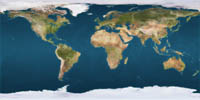
This map is a synthesis between my original earth map, gradient mapping of the USGS DEM information, hand painting, DEM modulation of detail, bathyspheric depth information, and the USGS Ocean clip. Bathyspheric data was used to modulate the color of the water so that deeper areas are a darker blue than shallow areas.
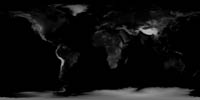
This is pieced together exclusively from the USGS DEM database. It contains landmass elevations only, with the ocean at zero, and the top of Mt. Everest at 255. Use this as a bump map to give the appearance of the Earth's rugged surface features. Some madmen have also used this data in POV Ray as a displacement map on a very finely divided sphere to produce a "true" 3D version of the Earth. The 10K version is VERY large, so make sure you really need that much detail.
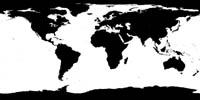
This is derived from USGS DEM data, with the addition of the Arctic ice areas which do not show up on USGS data (since they are not solid land masses.) Use this to control specularity and reflectance of the ocean surface.
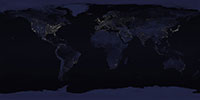
1024 x 512 color image. Very similar to the night lights map as published by NASA on their Blue Marble Page. I took their 30000 x 15000 black and white city lights map, and adapted it with a color table to a colorized version of my earth color map. This comes in 2k, 4k, and 10k versions in color, as opposed to the maximum 2k size of the NASA version of this map (higher resolution versions are available on the paid page only because of their size). Be sure to have a look at the tutorials page for a special rendering tip for using this map.
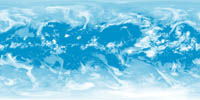
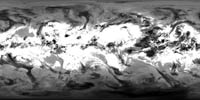
1024 x 512 color image. Based on a mosaic of satellite data, colorized, data errors retouched out, and fixed for seamless wrapping.
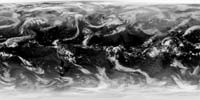
1024 x 512 greyscale image. Based on the same data as the color map, but leveled for the purpose of transparency mapping.

4096 x 2048 greyscale image. Built up out of real satellite imagery based upon a tutorial Dean Scott of Silicon Magic has posted. This is posted in JPEG2000 format. You need a special Photoshop plug-in to make use of jp2 images. I've thoughtfully provided a link:

JPEG 2000 Plugin from Fnord.

Commentaires Francais Ppsspp Original New [top] Online

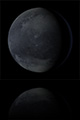
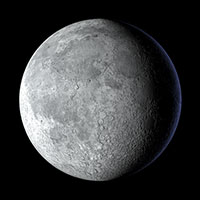
The Moon is a tricky planetoid to render. It has a very distinctive albedo which remains constant across its lit side, regardless of the angle of the surface to the sun. Therefore, standard rendering lighting models do not apply, as they always have a characteristic drop off in intensity as the angle of incidence to the light source increases. In Lightwave, there is an option to use a "non-Lambertian" lighting model on a surface setting. In previous versions of Cinema4D, you had a contrast control in the lighting setup. More recent versions of Cinema4D feature an Oren/Nayar illumination model in the lighting setup which allows you to simulate the lighting properties of "rough" surfaces. This is the method I used on the same pictured here.

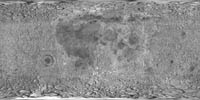
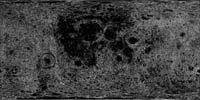
This map is based on a mosaic of satellite data, retouched for visible mosaic seams and for problems with the wrapping seam. Since this image contains highlight and shadow information independent of the location of your light source (inevitable because of how the moon is illuminated by the sun), you'll need to be careful how you light this so you don't break the illusion.

This map is my attempt to derive bump information from the above map. I did a high-pass filter operation to find all the edges of the craters, and then curved the result so that blacks and whites were white, and mid-tones were black. The results came out pretty well, as you can see from the sample image above.


this site works
best on Firefox:


website design © 2006 james hastings-trew